Photo2

 开启
开启
,形成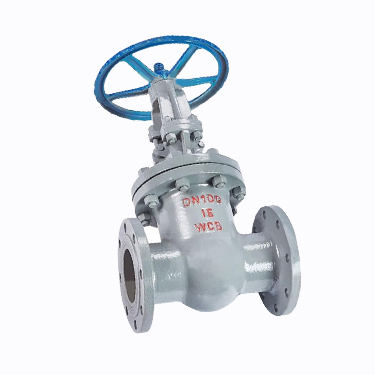 流通通道;
流通通道;
 介
介
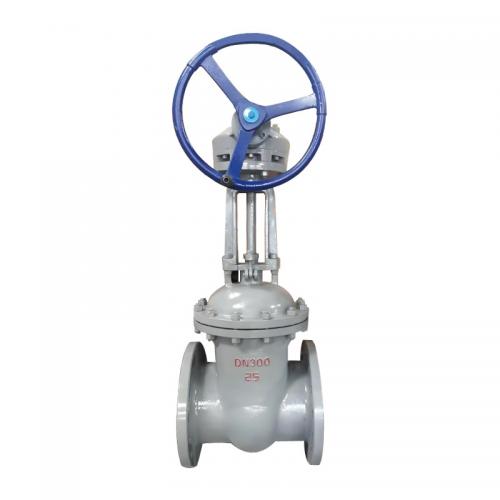
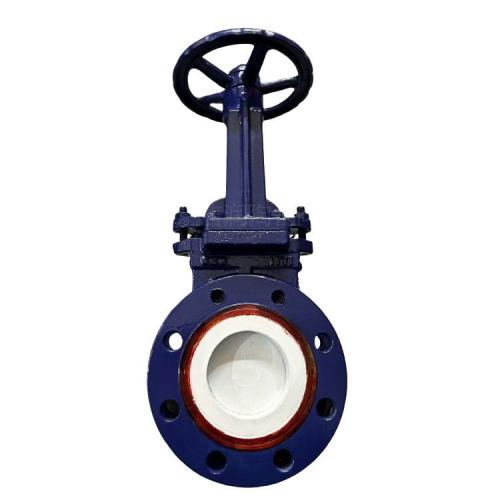
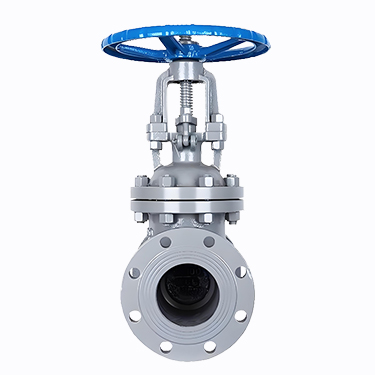
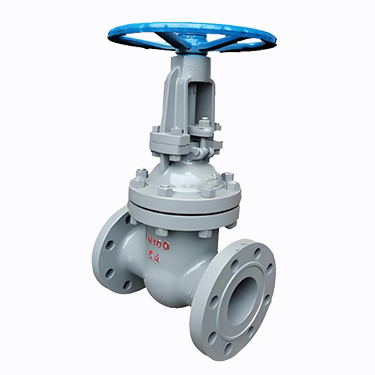
Cast steel gate valves are shut-off valves with valve bodies made of metal steel through casting processes. Their closing member is a gate plate, which achieves full opening or full closing of the valve through the vertical movement of the gate plate. They are mainly used in industrial pipelines in the petroleum, chemical, power and other industries for medium shut-off control.
The core characteristics of this valve include:
Material and Corrosion Resistance: The valve body of cast steel gate valves is usually made of carbon steel (such as WCB), stainless steel (such as 304/316), duplex steel or chrome-molybdenum steel, with specific material selection depending on the working medium and conditions. For example, stainless steel materials (such as CF8, CF8M) are suitable for media such as nitric acid and acetic acid, while duplex steel materials have excellent corrosion resistance, especially suitable for strong acid environments. Material grades and applicable temperature ranges are diverse. For instance, carbon steel is suitable for water, oil, and steam at temperatures ≤425℃, while chrome-molybdenum steel can withstand high temperatures from 550℃ to 750℃.
Structure and Working Principle: The movement direction of the gate plate is perpendicular to the fluid direction, supporting only full opening or full closing, and is not suitable for flow regulation. Sealing methods are divided into automatic sealing (relying on medium pressure to press the sealing surface tightly) and forced sealing (relying on external force to press the sealing surface tightly). High-pressure conditions mostly use automatic sealing, while low-pressure conditions use forced sealing. Valves can be divided into two types: exposed stem (valve stem rises and falls) and concealed stem (valve stem does not rise and fall). Exposed stem valves are convenient for observing the opening degree, while concealed stem valves have compact structures but require the installation of opening degree indicators.
Performance and Application: Cast steel gate valves have advantages such as small flow resistance, allowing bidirectional medium flow, and short structural length. However, they have large opening and closing travel, long time, and easy wear of the sealing surface. They are widely used in industrial pipeline systems, such as hydropower stations, chemical plants, and power stations, where large cast steel gate valves can be customized for ultra-low temperature (such as -196℃) or high-pressure conditions. For example, some enterprises' cast steel gate valves have a sealing grade up to VI level of ANSI B16.104 standard, with a leakage rate below 0.01%, and adopt surface treatment processes to improve corrosion resistance.